
By Peter Pavarini
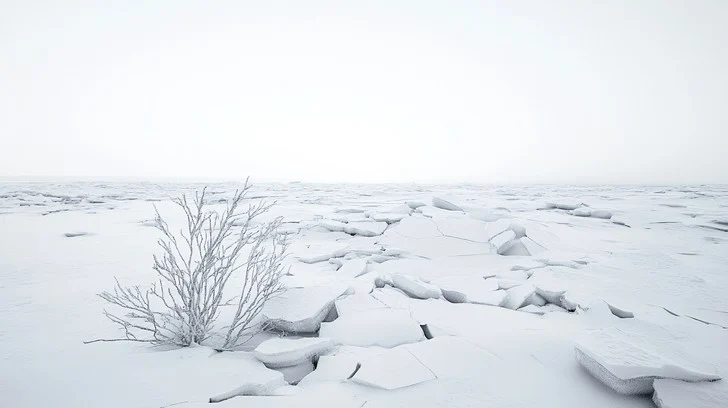
After the season’s first Alberta Clipper caught me by surprise, I’ve begun to wonder how I will ever survive another long, cold winter. This is hardly a new issue. Ever since humans left their ancestral cradle in the tropics, we’ve had plenty of reasons to ask why our forebears exchanged the warmth and comfort of Paradise for the icy winds and gray skies of the Frozen North.
The Sun Belt’s dramatic growth in recent years may be an inflection point, however. Mosquito and alligator-infested swamps once considered uninhabitable are now being transformed into year-round golf communities, not only for snowbirds and retirees, but also for millions who never want to see another snow shovel. Those who have already moved South can stop reading here.
Winter Mortality
Everyone else should keep in mind that surviving winter wasn’t always a figure of speech. Archaeologists and anthropologists estimate that, during the Upper Paleolithic[i], hunter-gatherers experienced a winter mortality rate 2 to 5 times higher than their mortality during the warmer seasons. Given that prehistoric life expectancy was rarely more than 40 years at birth, winter die-offs put the current debate about falling birth rates into sharp focus. Based upon skeletal remains, some paleo-demographers say as many as 70% of a tribe’s members over age 45 died during a particularly harsh winter.
I recommend reading Jean M. Auel’s historical novel The Clan of the Cave Bear[ii] for a better understanding of winter mortality.
Until humans adopted agricultural and food storage practices, starvation was the single largest killer in non-tropical environments. Consequently, our species was always one bad winter away from extinction until about 12,000 years ago.
The most important invention allowing a relatively hairless species to survive up North was not agriculture, but the lowly fireplace[iii]. The hearth, even gas-fired ones or those projected on a TV screen, remain at the center of today’s winter home.
The risk of premature death has caused me to investigate other strategies for surviving winter (at least until I visit Florida beginning in mid-January).
I’ve learned about a variety of winter practices that seem to blend pagan ritual with modern science. I’ll focus on those that until recently were considered common sense.
Slowing Down
First, we’re encouraged to see winter as nature’s way of telling us to slow down. In other words, use this time of year to take a break from the fast-paced activities of the other seasons. I’ve heard the same thing said about summer too, but there’s no reason why we shouldn’t follow this advice year-round. I especially like the idea of taking regular afternoon naps. On the other hand, doing “snowy meditations” is something I’ll let others try for me. I don’t think it’s wise for someone my age to make snow angels, except when playing with grandkids.
But I fully endorse the concept of “forest bathing”. Where I come from, we call this taking a winter hike. It certainly is prudent to see how plants and animals adapt to cold weather and apparently manage to live until the spring. There’s much we can learn by studying nature any time of year.
Sipping the Season
“Sipping the season” also seems like good way to survive winter. Gluhwein also known as “glow wine” is a hot beverage served in mugs throughout Germany and Austria during the holiday shopping season. Until they became terror targets in recent years, Christmas markets[iv] were known for serving copious amounts of this stuff. The way I see it, if Europeans feel obliged to abandon such traditions in the spirit of multi-culturalism, Americans should take up the torch and start drinking this tasty concoction of red wine, cinnamon sticks, cloves, anise, orange zest and honey. I have a few extra bottles of Cabernet Sauvignon I can donate.
Illuminating the House
“Lighting the dark” is a no-brainer. We can begin by ending Daylight Savings Time, but that’s another matter. No one should spend several cold months in the dark, so lighting plenty of candles and putting up Christmas lights the day after Halloween (and keeping them up until springtime) seem like fine ideas. I’ve previously addressed the supposed problem of excessive Christmas lighting in HOA-controlled neighborhoods[v] so I won’t linger on this subject.
Using Natural Fragrances
After the darkest time of year is well-illuminated, let’s not forget our primal sense of smell. As you probably know, our ancestors rarely bathed. Consequently, those forced to spend months in a cave with unwashed members of their clan needed a way to mask undesirable odors. I recently read an article about a Western North Carolina herbalist[vi] who suggests incorporating the following natural scents in one’s winter routine: Virginia pine, rabbit tobacco, mountain mint, bee balm, yarrow and horsemint. Most of these are readily available even in places where they don’t grow. So, while you’re busy decking the halls with garlands and wreaths, remember to sprinkle some of these aromatic herbs around your home, especially before an unkempt relative comes to visit.
More Common Sense
Finally, with the onset of winter, we’re urged to “tend to our inner compass”. Don’t look at the season as a void but as “a sacred pause”. This is the time to nourish one’s soul with reading (preferably not on a screen), contemplation and most importantly gratitude. Relaxing by the fireplace is never a waste of time. It’s needed to recharge one’s batteries, take stock in what’s really important, and plan the next chapter in one’s life.
As a wise person once said, everything seems to work better if you unplug it for a few minutes – including yourself. Sometimes the most productive thing you can do is simply relax.
I’ll end with this quote from Marcus Tullius Cicero:
“He does not seem to me to be a free man who does not sometimes do nothing.”[vii]
Then again, there’s no shame in doing nothing on a sunny beach at 80 degrees.
[i] From 50,000 years ago until the end of the last ice age around 10,000 years ago.
[ii] Crown Publishing (1980).
[iii] Early humans first mastered the use of fire around 1,000,000 years ago in South Africa.
[iv] Reuters has reported that Germany has being grappling with soaring security costs to maintain the popular tradition of Christkindlesmarkt. https://www.reuters.com/business/retailconsumer, November 25, 2025. Numerous reports in the social media indicate that many of such markets have permanently closed.
[v] “Lighting the World at Christmas”, https://alessandrocamp.com/2024/12/08/we-live-in-the-age-of-competitive-outdoor-lighting/
[vi] Ellen Jones, “Wintering Well”, NC Living, Holiday 2025.
[vii] Wordsandquotes.com
Be First to Comment