
By Peter Pavarini
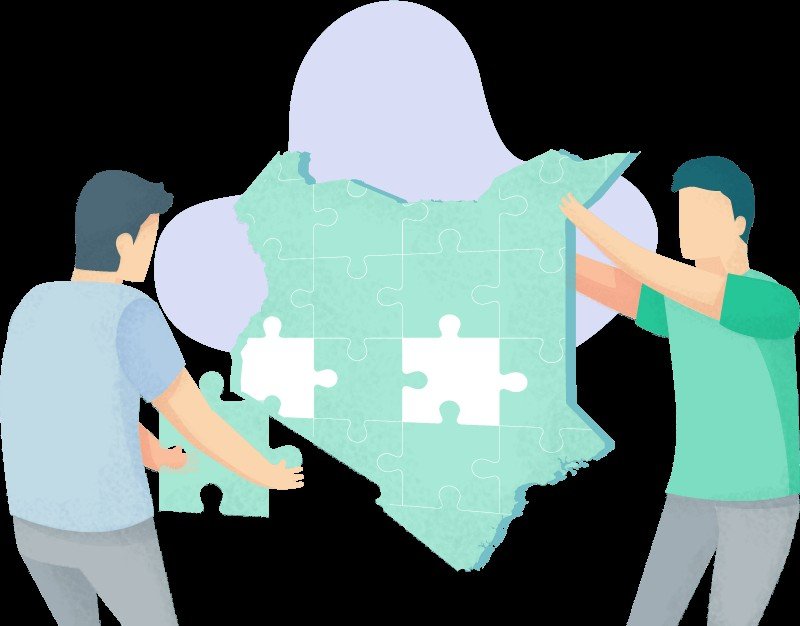
As the world becomes more politically and culturally divided, this is a good time to revisit the notion that we’re all linked by a relatively short chain of acquaintances – the so-called “Six Degrees of Separation”.
That theory was the predicate for a short story entitled “Chains” published by Hungarian author Frigyes Karinthy in 1929. During the 1960s, social psychologist Stanley Milgram’s “small world” experiments gave the hypothesis more credibility and inspired John Guare to write his 1990 play “The Six Degrees of Separation”.
Although the number six is now considered more of an approximation than a precise principle, the basic concept has held up relatively well despite its detractors. Network theory[i] explains why one person’s network of family, friends, co-workers, and neighbors logarithmically connects him with thousands, millions and eventually billions of other people. Other studies demonstrate how people balance the cost and benefit of forming social ties with the natural separation of geography, class, language and culture. Of course, not every pairing of two people is achieved in just six steps[ii], but – on average – six is accepted as a reasonable number.
What began as a theory before the Digital Age has recently been proven by social media networks such as Facebook and Twitter. One study of 180 million Microsoft Messenger users found an average separation of 6.6 degrees. Another study of 721 million users in 2011 and 1.1 billion users in 2016 found degrees of separation as low as 3.57 – sometimes less in the United States.
How the Internet Has Changed Personal Relationships
The social intercourse generated by connecting 76% of the world’s population (6.3 billion people) via the internet[iii] should have brought people closer together. To some degree it has; however, at least some of today’s discord is attributable to having increased exposure to the differing viewpoints of people you hardly know – if at all. In earlier times and even today in less developed countries, the bonds of family, village and tribe were enough to satisfy our inherent need for community. When people were unlikely to travel more than 20 or 30 miles from their birthplace, those who lived within that radius were effectively “everybody in the world”. The meaning of community in the Internet Age has changed all that.
Recently, this phenomenon became quite real to me. In just a few weeks, two distant cousins I’d never met reached out to me on Facebook. Having a relatively uncommon surname made the likelihood of that greater than if my name had been Smith or Johnson. Both gentlemen live outside the continental U.S. and communicate with me in English even though they primarily speak other languages (Italian and Spanish). Naturally suspicious of all internet scams, I responded very carefully at first. However, after some due diligence, I felt sure that in both cases we shared common ancestors even though our respective branches of the family tree had diverged more than 100 years ago.
What We Have in Common with Our Cousins
Through texts, emails and telephone calls, I’ve discovered that I have more in common with these “internet cousins” than I have with some of my closest U.S. relatives. The three of us are roughly the same age, have some similar interests and share the same curiosity about our lineage. In the case of my third cousin, we have a common great-great-grandfather who fought as an Italian mercenary in the American Civil War. In the case of my second cousin, we seem to have similar tastes in music, dogs and history. Although the amount of DNA we share is quite small[iv], for some reason there are personal traits that seem to have been passed down from our ancestors.
Wanting to know why my internet cousins seemed more like me than not, I’ve studied some of what’s been written about distant cousins.[v] One writer described cousins as having a “unique bond” that sits between a lifelong friendship and family. That may be true, but it doesn’t adequately explain my curiosity about these long, lost cousins. If genetics can’t provide the answer, there may be other ways personal similarities are passed down when families are separated by geography, language and cultural variables.
Singer-songwriter Marc Cohn captured this mystery in his song “The Things We’ve Handed Down”:
Will you laugh just like your mother?
Will you sigh like your old man?
Will some things skip a generation
Like I’ve heard they often can?
Are you a poet or a dancer?
A devil or a clown?
Or a strange new combination
Of the things we’ve handed down?
By our fathers and their fathers
In some old and distant town
From the places no one here remembers
Come the things we’ve handed down[vi]
More Than Cousins
I also learned that not all societies make the same distinction between siblings and cousins as most of us in the West do. For example, in African cultures, the Ubuntu philosophy sees siblings and first cousins as having the same degree of kinship. Due to widespread shared parenting in those cultures, your mother’s sisters are considered your mothers – not your aunts. Likewise, your father’s brothers are the same as your natural father. Consequently, no linguistic or social boundary separates your first cousins from your natural siblings.[vii]
Even though marrying one’s cousin remains disfavored (and in many states prohibited) because of genetic risks, the issue continuously comes up. Recently, the state of Maine elected someone to the U.S. Senate who married his second cousin. I suppose that’s not as troubling as marrying one’s own sibling to skirt immigration laws, but disparaging someone who marries a cousin is now fair game in today’s political environment. Historically, Thomas Jefferson married his third cousin, and Queen Elizabeth II and Prince Phillip were both descendants of Queen Victoria (making them third cousins). So, over the centuries, very little has changed – at least when it comes to holding public office.
Talking to Strangers
Perhaps the best reason for connecting with your internet cousins is to replenish your circle of acquaintances as you age. Inevitably, close relationships change as your close friends move away or die, careers end, and children become more independent. Various studies on aging show that one-third of older adults experience loneliness or lack of companionship.[viii] This trend appears to be accelerating even among younger people.
It’s perfectly normal to avoid approaching strangers in public except in emergencies or other highly unusual circumstances. We instinctively make rapid assessments of people we don’t know or assume that the other person wants to be left alone. Fear of rejection is a major impediment to spontaneous social interactions. Cell phone use, earbuds, automated checkouts and online shopping have only made people less comfortable with talking to strangers.[ix]
However, when someone does reach out to you (as my internet cousins did), one of the biggest social barriers is removed. Ostensibly, you have something in common. The awkwardness of having a casual conversation about the weather or some other safe subject is replaced by the certainty of something you’re both familiar with. If nothing else, it reminds you that you’re both members of the same universal family.
Finally, it’s often said that every family has at least one crazy cousin. If you don’t know who that person is, it’s probably you.
[i] Duncan J. Watts & Steven H. Strogatz, “Collective Dynamics of ‘Small- World’ Networks”, Nature, June 4, 1998.
[ii] Some highly isolated individuals or groups, such as the “unreached” tribes of the Amazon, require a greater number of steps.
[iii] International Telecommunication Union, Facts and Figures 2026.
[iv] A third cousin has less than 1% common DNA. A second cousin has about 3.1% common DNA. Considering humans and chimpanzees share around 98% of their DNA, these distant human relatives aren’t much closer than some other primates.
[v] Among other things, I’ve learned there’s a lost cousins website.
[vi] From Marc Cohn’s album The Rainy Season (1993)
[vii] I experienced this on my way back from the Central African Republic where I had been part of a medical mission team. The father of a teenage girl in the village I was visiting asked whether I would escort his daughter back to the U.S. where she was scheduled to receive medical treatment unavailable in Africa. I eagerly agreed not fully understanding what I had been asked to do. The girl and I flew Air France from Bangui to Paris where we had reserved rooms in the same airport hotel during the layover. She was met at the airport by a group of people from her African village who were then living in Paris. I told the girl to enjoy her evening with her fellow villagers, and I’d see her in the morning. We’d take the shuttle together to the airport. When I called her room the next day, there was no answer. So, I knocked on her door, and a scantily clothed young man answered. Behind him I could see the young lady still in bed. Because I didn’t want to miss our flight, I demanded that she get dressed quickly so we could make our shuttle. I felt as though I had failed. What would I tell her father? I later learned that the young man was her first cousin – therefore in her culture the same as her brother. They had grown up in the same home sharing the same bedroom since early childhood.
[viii] Lauren B. Gerlach, Erica S. Solway, Preeti N. Malani, “Social Isolation and Loneliness in Older Adults, JAMA, May 23, 2024.
[ix] Debbie Cohen, “The Surprising Benefits of Talking to Strangers”, Epoch Times, November 5-10, 2026.
Be First to Comment